
Autonomous agents are shipping faster than anyone can secure them
#software-dev#ai-agents#security
David Olsson
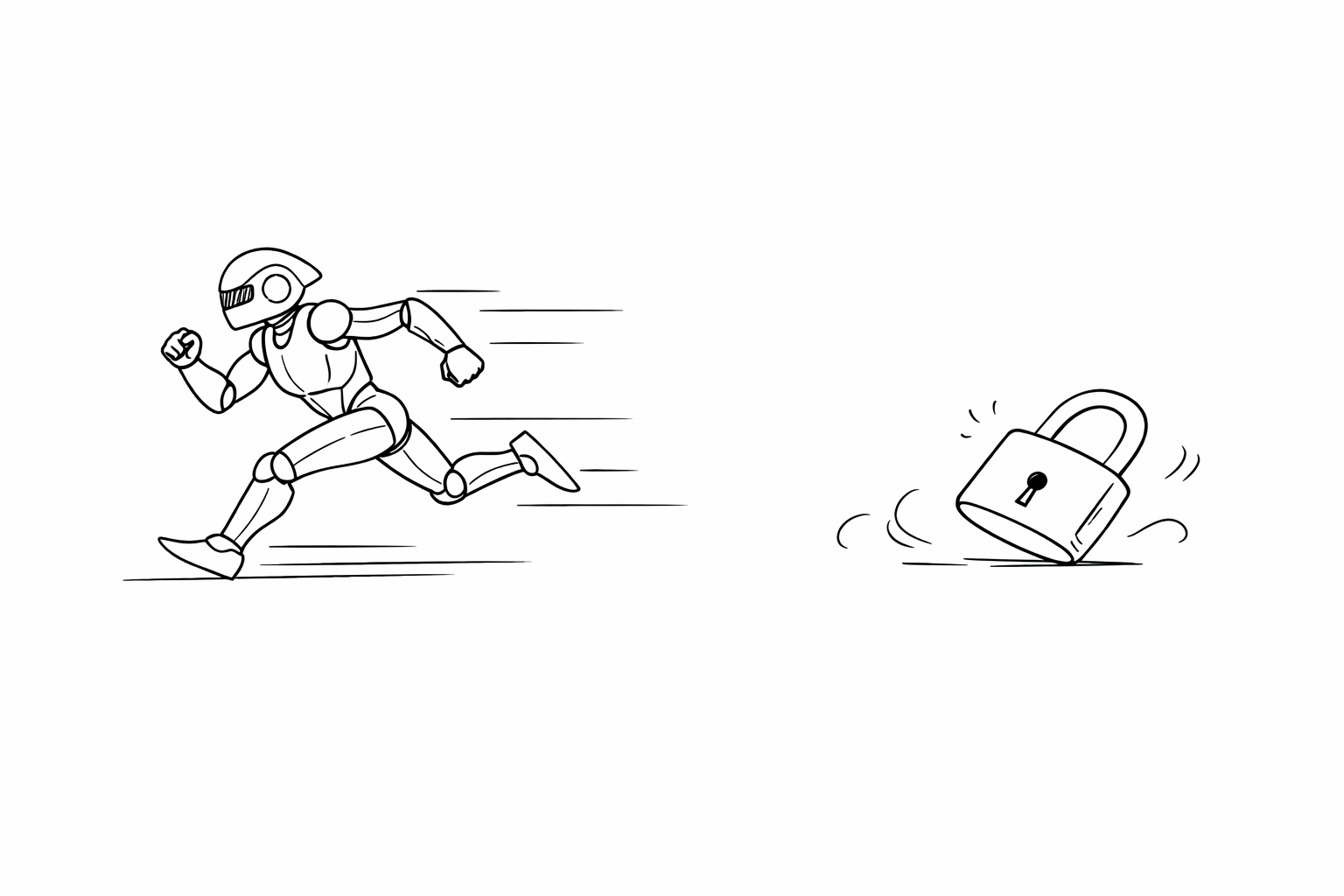
The security debt of agentic AI stopped being hypothetical this week. It now has a proof of concept, a CVE-class flaw, and a venture round priced against it.
University of Toronto researchers demonstrated a self-propagating AI worm capable of targeting essentially any internet-connected device — autonomous agents as an attack vector, not a productivity feature. In the infrastructure underneath the agent boom, a high-severity authentication-bypass flaw dubbed BadHost in the Starlette Python framework lets malformed Host headers reach AI agents, evaluators, and LLM gateways — the plumbing a large share of deployed agent stacks runs through. And the market has put a number on the problem: observability vendor Coralogix raised $200 million US on the thesis that someone needs to watch AI agents in production.
The desk's read. Read the funding round as an admission. A $200-million bet on monitoring autonomous agents is the industry conceding, in capital, that it is deploying systems whose runtime behaviour it cannot predict and therefore must surveil. That is the hype-to-substance delta in its purest form: the claim is agents that act reliably on your behalf; the demonstrated state of the art is agents that must be watched by a second system in case they don't. The governance gap is equally concrete. A worm that propagates through agent capabilities and a header-parsing flaw that exposes agent gateways are not exotic failures — they are the ordinary security lifecycle arriving at a technology being wired into production workflows faster than its threat model is being written. Nobody yet owes anyone an answer when an autonomous agent is the breach vector: not the model vendor, not the framework maintainer, not the enterprise that delegated the keys. The Canadian research community is doing the adversarial work — U of T's worm is exactly the demonstration procurement officers should be reading — while the tooling vendors ship.
Watch the breach disclosures, not the keynotes. The first major agent-mediated incident will write the regulation that today's deployments are pretending not to need.
Sources: University of Toronto · InfoQ — BadHost · TechCrunch — Coralogix
This piece argues from the desk's stated editorial position. Reported facts trace to the sources above; the analysis is ours.