
Modeling Alberta's QC Lifecycle: From ITP to Mechanical Completion
#architecture#domain-model#alberta#compliance#aimqc#devlog#quality-control#oil-and-gas
David Olsson
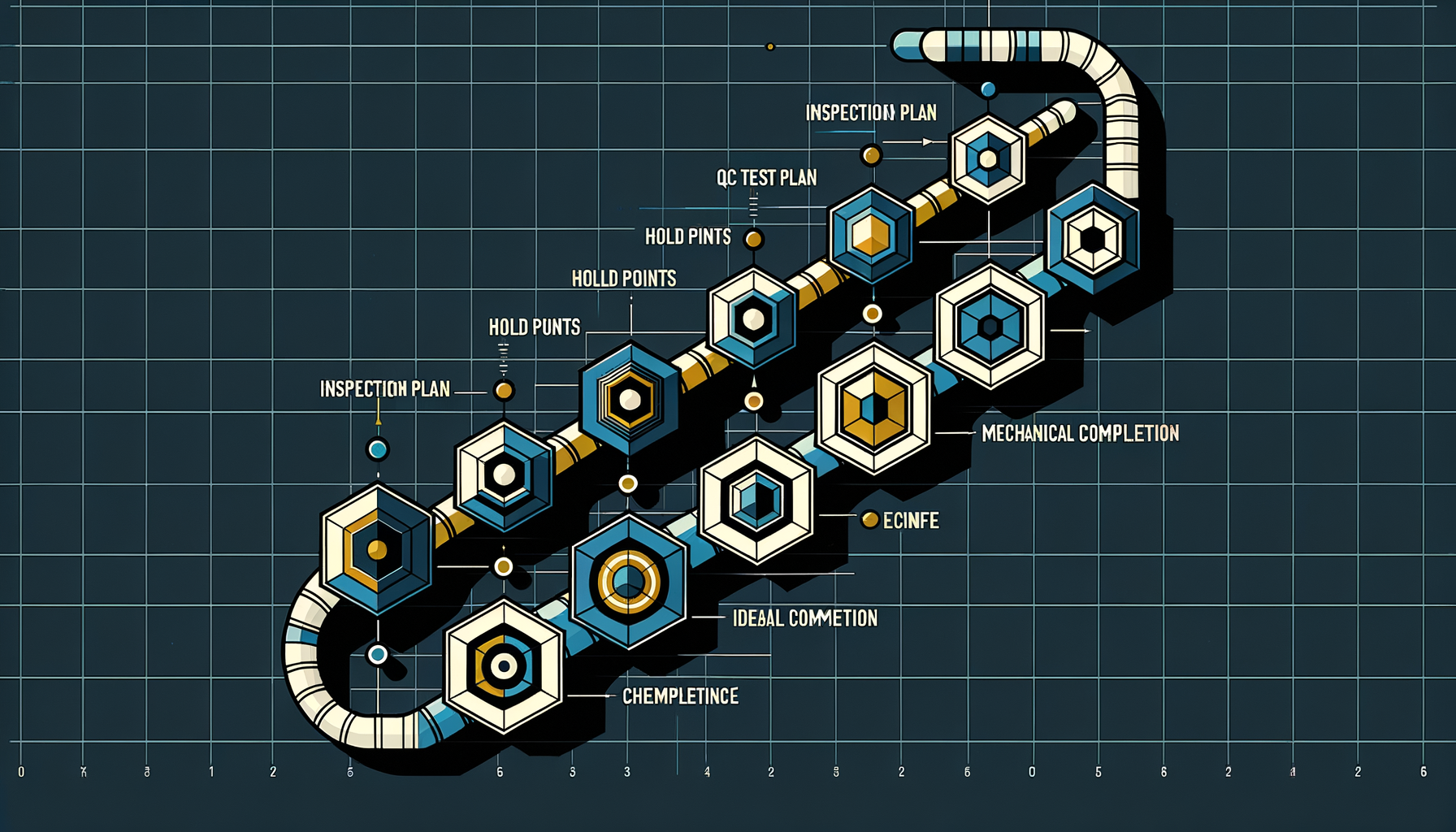
The AIMQC data model is not a generic quality management schema with Alberta stickers applied. It was built from the ground up around how QC actually works on Alberta industrial construction projects — from the planning phase through material receipt, fabrication, testing, and formal system handover. The schema is 4,500+ lines of ZModel. Here is what it covers and why.
Twelve phases, one data model
Construction QC on Alberta oil and gas projects follows a predictable lifecycle. The phases do not change between a small instrument installation and a large piping project. The volume changes. The discipline mix changes. The lifecycle is the same.
Each phase has its own records, its own actors, and its own compliance requirements. The data model has a model or a set of models for each.
Alberta-specific requirements
Generic QC software handles ITPs and inspection records well enough. Alberta construction QC has requirements that generic tools do not cover.
LSD Coordinates. Alberta land is described using the Dominion Land Survey system. Projects are located by Legal Subdivision (LSD) coordinates — a system unique to the Canadian prairies. Site records in AIMQC store LSD coordinates alongside standard lat/long, because an auditor in Alberta will ask for the LSD reference, not GPS coordinates.
ABSA and AB83 filings. Pressure vessels and piping in Alberta are regulated by ABSA (the Alberta Boilers Safety Association). Before a pressure-containing system can be placed in service, an AB83 form must be filed and acknowledged by ABSA. The AB83Log model tracks every filing: the form number, the test pack it corresponds to, the filing date, and ABSA's response. No AB83 acknowledgment means no commissioning.
AER requirements. The Alberta Energy Regulator has reporting requirements for certain types of construction and operating activities. These are reflected in the regulatory filing phase of the lifecycle model.
Intervention types from ISO 10005. Hold (H), Witness (W), Review (R), and Surveillance (S) points come from ISO 10005 (quality plans). Alberta QC practice follows this framework. The InterventionType enum reflects all four types, not just H and W.
Material traceability
One of the harder modeling problems in construction QC is material traceability: the ability to prove, at turnover, that every installed piece of pressure-rated material has a valid mill certificate (MTR), that the heat number on the MTR matches the heat number recorded when the material was received (MRR), and that the material was inspected and accepted before installation.
The chain looks like this:
Mill Certificate (MTR)
  └── heatNumber
        └── MRRLog.heatNo (received on site)
              └── BillOfMaterials.heatNumber (matched to PO)
                    └── installed to Weld or System
Every link in that chain must be traceable. Missing any link means the material cannot be certified, and the system cannot be turned over. The model enforces the linkage without requiring manual cross-referencing.
Turnover and the dossier
The endpoint of the lifecycle is the turnover dossier. A dossier is a complete handover package for a system or area: all ITRs, test pack results, as-built drawings, calibration certs, AB83 acknowledgments, and certifications, assembled and signed off. The client's acceptance of the dossier is the formal transfer of the system.
TurnoverDossier tracks completeness at the document-type level. As each required record is linked, the completion percentage increases. The system does not allow a dossier to be submitted while required records are missing.
Why the schema is 4,500 lines
Every model reflects a real document, a real workflow, or a real regulatory requirement. There are no placeholder tables or speculative future features. The size of the schema is proportional to the complexity of the domain — and the domain is genuinely complex, because it has to be.
Alberta industrial construction QC is not a process that can be simplified. It can be organized, enforced, and tracked. That is what the data model is for.
David Olsson is CTO at AIMQC. Contact: dolsson@aimqc.com